Product Designer · UX · AI Interaction Design
Road Dawg
AI travel companion: from concept to interactive prototype
Product design · AI companion UX · Onboarding · Personalization systems · Mobile (iOS) · Visual design
Overview
Road Dawg is an AI travel companion app built on a simple premise: who you are should shape where you go. Not a list of top-ten tourist spots: a feed of experiences that actually matches your traveler type, energy, interests, and history.
I led product design from concept through interactive prototype: defining the experience model, the AI interaction paradigm, the personalization system, and the visual language. The goal was to give the founder a polished, investor-ready product vision: something they could walk into a room with and show exactly what the app would feel like before a single line of production code was written.
The Problem
Most travel apps give everyone the same recommendations. The information is abundant. The personalization is almost nonexistent.
A solo digital nomad working from cafés and a family of four on a summer holiday shouldn't see the same “top spots in Rome.” The gap between generic discovery and genuinely personal recommendation was the design problem worth solving.
Onboarding: Building the Personalization Foundation
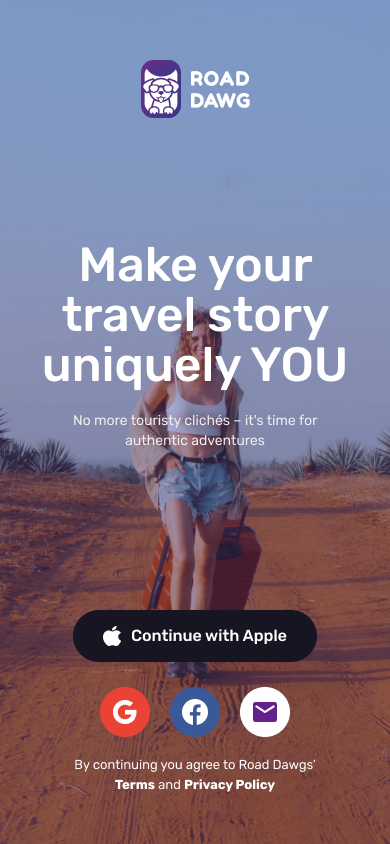
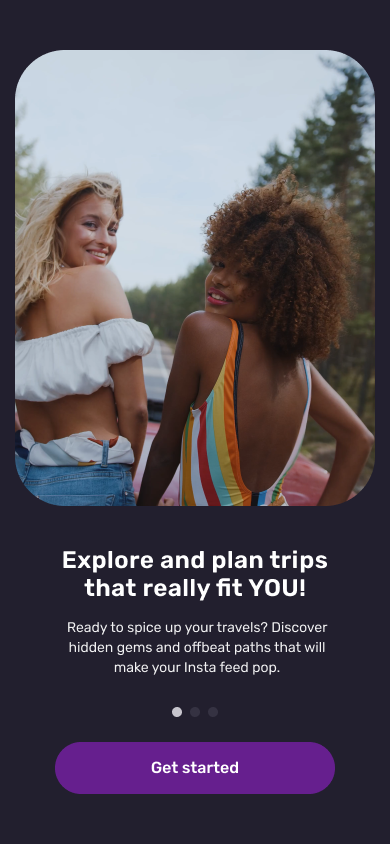
The first design challenge was capturing enough context to make personalization work, without making it feel like a form. The onboarding needed to feel like arriving somewhere, not filling in a spreadsheet.
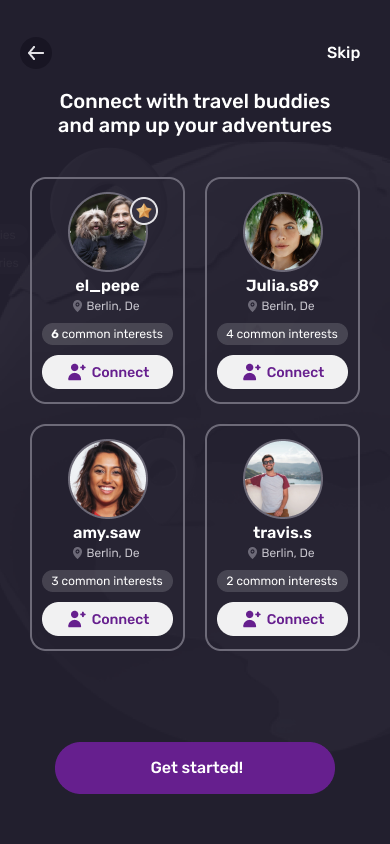
I designed a three-step flow that established traveler type (Solo, Digital nomad, Couple, Family, Group), seeded the recommendation engine, and immediately introduced the social layer by surfacing potential travel buddies with shared interests. The social connection wasn't saved for later. It was part of the welcome.
Max: The AI Companion
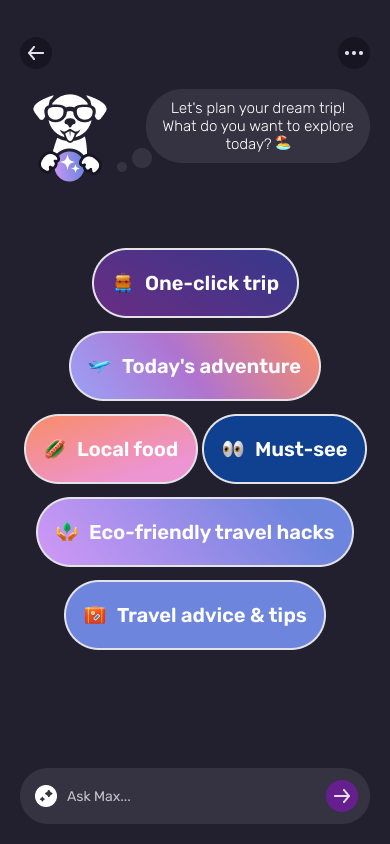
Rather than burying AI in a search bar or a settings menu, I designed Max, a conversational companion that acts as the entry point to the whole experience. The dog mascot with sunglasses gives the AI layer a personality: fun, spontaneous, a little unexpected. Not a corporate assistant. A road dawg.
Quick-action prompts (One-click trip, Today's adventure, Local food, Must-see, Eco-friendly travel hacks) reduce the friction of a blank text input while giving full flexibility. The interaction model sits between structured and open-ended, approachable for new users, powerful for explorers.
Vibes & The Map
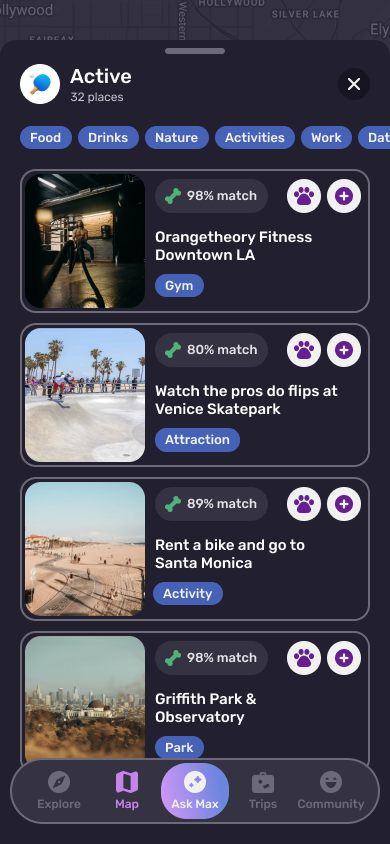
The core of the recommendation engine surfaces as Vibes: activity categories (Food, Drinks, Nature, Activities, Work, Dating) that filter location-based suggestions. Each place shows a match percentage based on your profile and history.
Showing a match score instead of a star rating shifts the question from “is this place good?” to “is this place right for me?”, which is a fundamentally different product proposition.
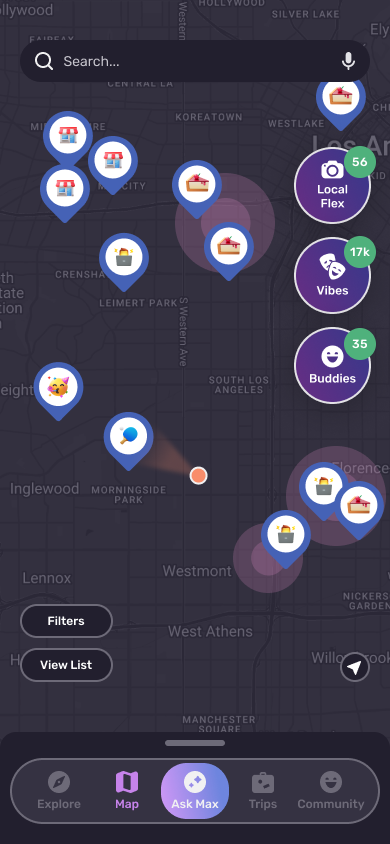
The map goes further: layered with Local Flex, Vibes, and Buddies filters so you can see where people like you are actually going, not just where the tourist trail leads.
Trips
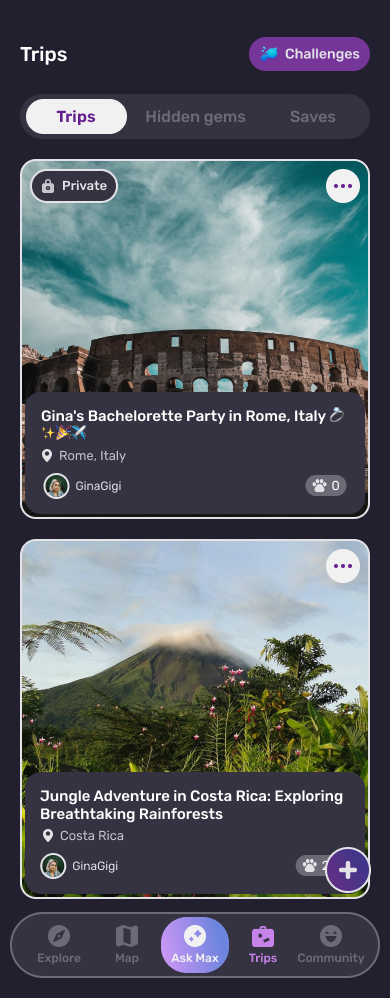
The Trips feed surfaces AI-generated itineraries, both personal and shared, built around your profile and context. Tabs for Hidden gems and Saves let users build a library of places and experiences over time, turning the app into a travel record as much as a planning tool.
The Social Layer
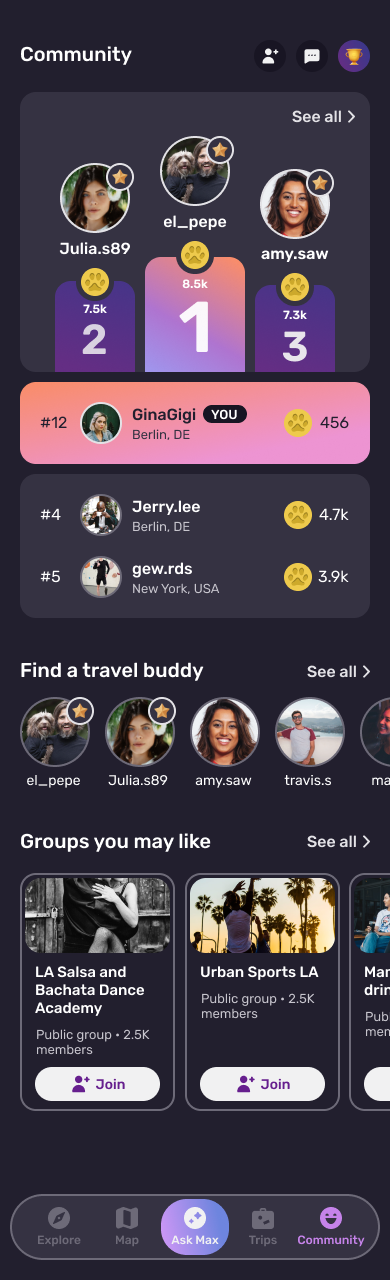
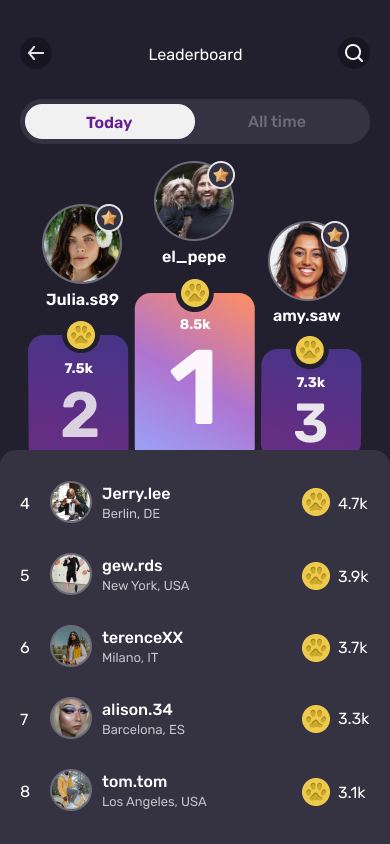
Travel is more interesting with the right people. The Community tab adds leaderboards, interest-based travel groups, and buddy matching, turning Road Dawg from a planning tool into a place where a travel identity forms over time.
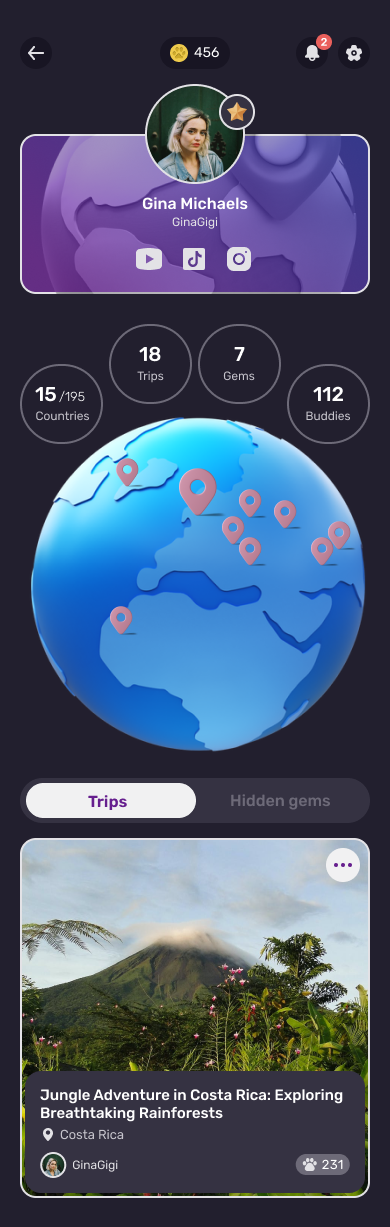
The profile screen tracks countries visited, hidden gems discovered, and connections made, a globe that fills in as you go. Stats like “15 countries, 18 trips, 7 gems, 112 buddies” make the product feel like it grows with you.
Visual Direction
The UI is built around Los Angeles sunset energy: deep navy and purple backgrounds with warm coral-to-violet gradients, bold modern type, and high-contrast UI elements that feel premium without being cold. The palette captures warmth and spontaneity: the mood of planning something you're genuinely excited about.
The mascot (Max), the emoji-forward quick actions, and the vibrant tab bar all reinforce the tone: this isn't a utility app. It travels with you.
Outcome
Road Dawg went from concept to interactive prototype with a fully defined interaction model: onboarding, AI companion experience, personalized recommendation system, map layer architecture, trip management, and social features. The work established the product's visual language and core UX patterns ready for engineering handoff.
The design challenge at the core: make AI feel like a companion, not a search engine.